
How to Navigate the Inferno Protocol Maze
Memory is your map. Marks are your guide. Everything else is allowed to lie.
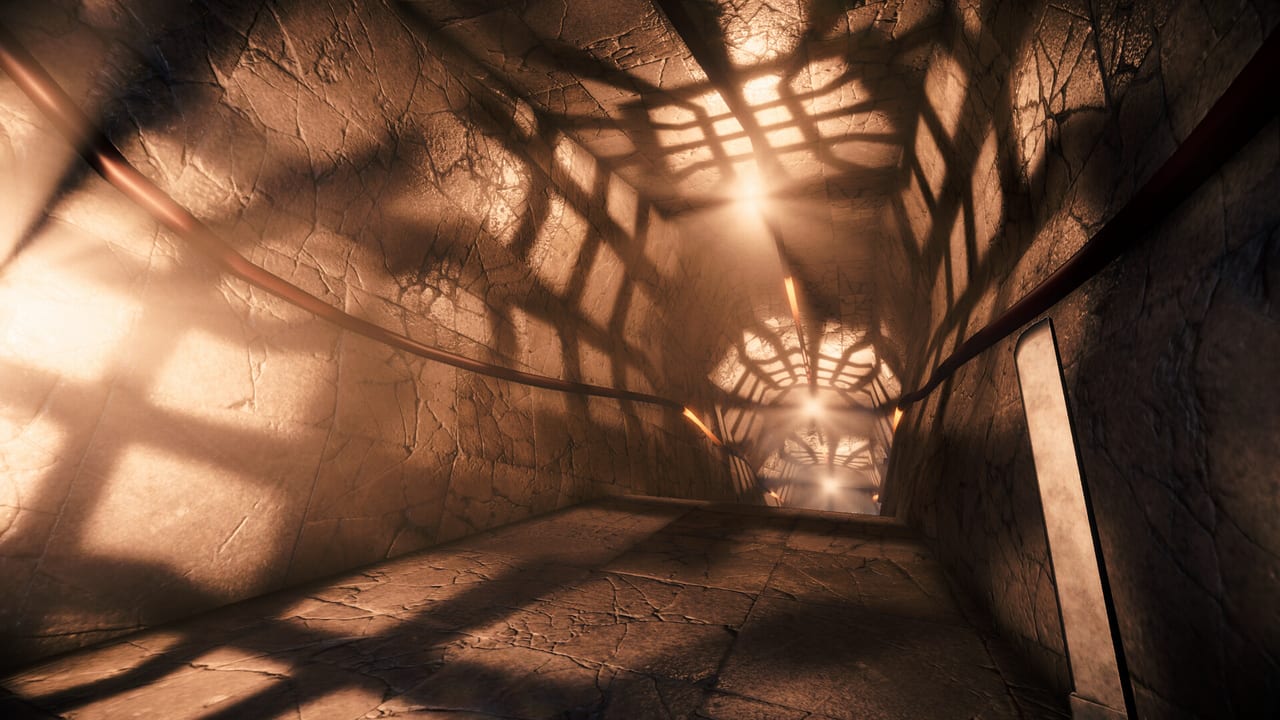
The maze is the game. Combat, injectors, and cooking are how you stay alive long enough to walk it. Inferno Protocol is a circular, multi-versal structure the size of a bad metaphor — press copy compared it to tens of thousands of football fields — and it does not stay still. The corridor you entered is not the corridor you leave. Biomes replace each other: Junkyard scrap gives way to Jungle, then Swamp, with more layers promised in Early Access. This page is how to find your way without a trustworthy HUD map.
If you have not finished the Prologue, do that first via getting started. If you play with other people, pair this with the co-op guide. Marks that only you understand will kill your friends.
Why the official map cannot save you
Steam’s own description says there is no map you can trust. You will find old hand-drawn paper maps. Some are useful. Some are panic. Some are lies. A compass helps until it does not. Notes and scratched warnings from previous walkers point at injectors, at exits, and at things you should not approach. Whoever left them is not around to be asked.
That is not flavor. It is the navigation system. You are supposed to be slightly lost. The skill is reducing how lost you are after a shift. Players who try to speedrun by memory without leaving physical evidence are the ones who ping Discord asking if the game is broken.
Marks you control
The press kit lists spray, chalk, and notebooks as the navigation and marking system. Official store copy adds dropped objects. Use all four, on purpose.
- Spray. Fast, visible at range in Junkyard lighting, easy to overuse. Pick a shape that is not a generic arrow. Arrows rotate with your confusion. A unique glyph does not.
- Chalk. Quieter visually, better for interiors and night. Good for counting junctions: one mark for a dead end you verified, two for a route that still leads home.
- Dropped objects. A wall torch, a flask, a scrap rack, a corpse you dragged (carefully). Objects survive in your memory even when paint blends into rust. Do not drop your only weapon as a breadcrumb.
- Notebook. Added in the July 2026 content update. You can draw, mark positions, and show the page to other players in real time. Notes save and sync. The notebook is hidden during the Prologue, which is why that chapter feels more linear.
Agree on a legend before you leave the settlement. Example: circle means “I verified this still connects to home,” slash means “shift detected,” skull means “do not.” If six people invent six legends, you have built a second maze out of graffiti.
Marks you do not control
Environmental sketches, panic handwriting, and fake-looking maps are content. Believe them the way you believe a stranger in a horror film. Cross-check. If a map shows a straight shot to an exit through a biome you have not unlocked, it is bait. If a note mentions an unlabeled injector in a room that smells like a trap hallway, it is probably both true and expensive.
False or deliberately misleading marks are called out in official materials as a way to lead players into danger. In co-op that can be grief. In solo it can be leftover world-building. Either way, if a mark is not in your squad’s handwriting or spray style, treat it as hostile until you have walked the route with a retreat plan.
Layer by layer, not all at once
Early Access started with three playable layers:
- Junkyard (Ground Floor). Industrial corridors, work lights, containers, humanoid threats, good for learning spray contrast. Achievement: Ground Floor.
- Jungle (Getting Warmer). Foliage, low visibility, tree-line silhouettes, creatures that blend. Crossbows and katanas show up in official art here for a reason: range and quiet matter.
- Swamp (Deep Enough). Wet, torch-dependent, fire barrels that rain can kill. Sound travels. Whisper.
A Winter layer is named on achievements (Rock Bottom) but was not in the “three layers playable” Early Access statement. Do not plan a Winter route from a fan map. When it lands, it will be on the roadmap.
Each layer is a different universe stacked into the circle. Lighting, footstep audio, and creature palettes change. Your Junkyard glyph still works in Jungle if you keep the shape, but your eyes will not. Slow down at biome seams. Seams are where people lose the settlement.
Compass, clocks, and the watch
A wrist watch with functional UI was added as an item. Use it. Day-night is not cosmetic: some interiors have creatures during the day and empty at night. Night looting is a navigation strategy — you are choosing a time window, not just a hallway. Fire barrels and campfires double as beacons if you accept the rain risk. Wall torches you place are breadcrumbs you can see from farther than chalk.
A compass is listed as a tool that “helps, until it doesn’t.” That usually means magnetic or maze-scripted failure, not that you should throw it away. Use it as a tie-breaker between two marked routes, never as the only input.
Finding the exit without getting poetic
The win condition on the box is: survive and find the exit. Notes will claim to point at one. Achievements imply depth: ground floor, warmer, deep enough, rock bottom. “Stop Maze Turning” exists as an achievement name, which is the strongest public hint that rotation can be interrupted. We do not have a public, studio-published puzzle solution, so this wiki will not fake one. If you discover a consistent method, it belongs next to a patch number on patch notes, not as folklore.
Until then, the operational definition of “not lost” is: you can return to the settlement without panic, you can find your last trap line, and you can point at the last biome seam you crossed. Practice that on Junkyard before you inject double jump and yeet into Swamp. Biome feel is on maze layers. The door hunt is on how to find the exit. Combat keeps you alive while you walk. Crafting keeps the torches stocked. Neither replaces a wall you marked yourself.
Frequently Asked Questions
Quick answers for Inferno Protocol survivors.
Is there a minimap in Inferno Protocol?
Nothing you can trust. Paper maps exist and some lie. Spray, chalk, dropped objects, and the co-op notebook are the real navigation tools.
How do I find my way back to the settlement?
Leave a unique spray or object at the gate, mark junctions on the way out, and do not trust a compass as your only input. The getting started guide covers the first loop.
Can other players fake marks?
Official copy warns that wrong or deliberate marks can lead you into danger. Agree on a squad signature. Treat unknown graffiti as hostile until proven.
Does the maze really change while I play?
Yes. That is the premise. Corridors you used may not exist on the walk back. Marks and memory are how you detect a shift.